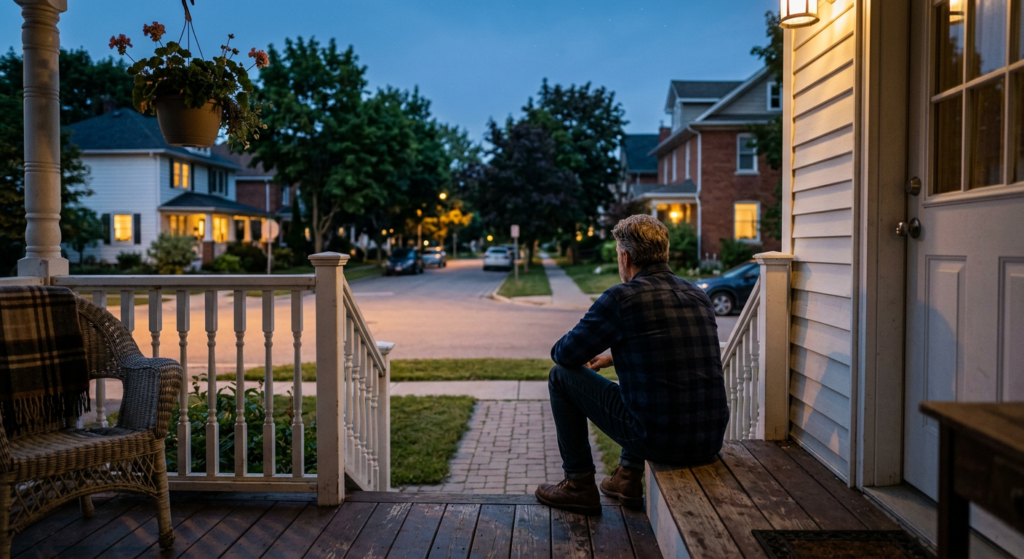
There was a stretch of maybe six years where I could feel Sunday coming by Saturday afternoon. Not consciously at first — I’d just notice I was a little short with my kids during dinner, a little quieter than usual, and it took me embarrassingly long to connect it to the calendar. By Sunday at 6 p.m. it had a name in my head: the dread. I assumed it meant I hated my job. I didn’t, particularly. That wasn’t actually the problem, though it took me years to stop assuming otherwise.
Chasing the wrong cause
What I eventually figured out, mostly by accident, was that the dread wasn’t about Monday at all. It was about how I’d spent the weekend. On the Sundays where I’d wasted the day — slept late, scrolled my phone on the couch, put off the one thing I’d told myself I’d do — the dread showed up right on schedule, like a bill coming due. On the rare Sundays where I’d actually done something, gone somewhere, finished a project around the house, the dread barely registered, and I didn’t understand why until I started paying closer attention to the pattern instead of just enduring it.
That reframed the whole thing for me. I’d been treating Sunday night dread as a verdict on my job, when it was actually closer to a verdict on the sixty hours before it. A wasted weekend leaves you facing the week with nothing to show for the time off, and some part of your brain knows it and doesn’t like the math, even if you never consciously run the numbers yourself.
One small change
The change I made wasn’t dramatic. I started protecting one activity on Saturday that had nothing to do with chores or errands — for me it’s usually something physical, a hike or a long walk with the dog, sometimes just yard work I actually chose rather than was assigned by circumstance. One thing that felt like it was mine. It sounds too simple to matter, and for the first few weeks I didn’t think it was doing anything at all.
It took about a month before I noticed Sunday evenings had gotten quieter. Not silent — I still don’t love Mondays, and I don’t think I ever fully will — but the specific dread, the countdown feeling, had faded into something closer to ordinary end-of-weekend tiredness. The difference between those two things turned out to be enormous, even though from the outside they’d look identical to anyone watching.
I don’t think this fixes a job you actually hate. If the job’s the real problem, a good Saturday won’t cover for that indefinitely, and I’d be lying if I said otherwise. But for me, and I suspect for a lot of guys who assume the dread is about work, it wasn’t about work at all. It was about handing the week a version of myself that had nothing behind it, showing up Monday already running on empty from a weekend that never actually happened. Give the weekend something real, and Sunday night stops feeling like a countdown.
What I’d say to someone in it now
If you’re in the middle of that dread right now, reading this on a Sunday evening with the feeling already creeping in, I’d say the fix probably isn’t going to feel like enough when you try it. Mine didn’t, not for the first few weeks. A single Saturday hike felt too small to matter against a feeling that had been building for years. But the dread isn’t solved by one grand gesture, it’s worn down slowly by consistently giving the weekend something real instead of letting it dissolve into a screen. Small and repeated beats big and occasional here, even when the small version feels almost embarrassingly modest.
I’ve since noticed the same pattern shows up in other people around me once I started paying attention to it. A coworker who dreads Mondays turns out to spend every weekend catching up on chores he’s been putting off all week, never once doing something that felt like it was for him. A neighbor who seems perpetually tired on Sundays admits, when I ask, that his weekends mostly disappear into other people’s errands. I don’t think this is a universal fix for everyone’s version of the dread, but I’ve stopped assuming it’s only about the job whenever I hear someone describe it.