My first instinct was to wear the suit I already owned. It fit fine, it was navy, it would have done the job. Nobody would have said anything. But somewhere in the planning I realized I was about to walk my daughter down the aisle in the same suit I’d worn to two funerals and a work conference, and that felt wrong in a way I couldn’t quite articulate at first.
It wasn’t about vanity. It was about the fact that some days actually are different from other days, and dressing like it’s just another Tuesday undersells that. A father-of-the-bride suit doesn’t need to be flashy, but it should feel considered. It should feel like you thought about the day, not like you grabbed whatever was already hanging in the closet because the day snuck up on you.
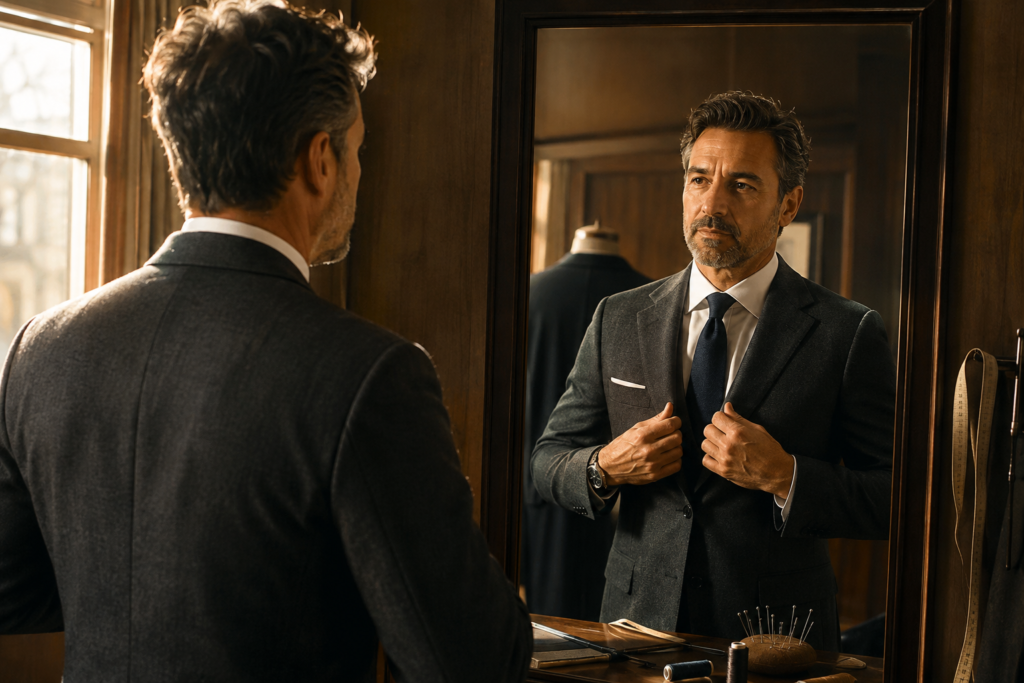
I went to a tailor instead of a department store, which was its own small adjustment. I’d bought suits off the rack my whole adult life and just accepted whatever fit I got, hemmed a little here, taken in a little there, close enough. This time I actually sat through a proper fitting, three visits total, and the difference wasn’t subtle once I saw it. A suit that’s actually built for your shoulders sits completely differently than one that just technically covers your body. The sleeve doesn’t bunch. The jacket doesn’t gap at the collar when you move your arms. You stop thinking about the clothes at all, which is exactly the point.
I ended up going with a charcoal suit, slightly different cut than my usual navy, tailored properly instead of bought off the rack and hoped-for. The tailor talked me out of a couple of choices I would have made on instinct, a wider lapel I liked in the mirror but that didn’t actually suit my frame, a pocket square pattern that would have photographed as busy. I trusted him on both, and looking back at the pictures, he was right both times.
What stuck with me afterward wasn’t the suit itself, it was what it represented. Dressing well for the moments that matter is a small way of telling the people in the room that you understood the weight of the occasion. My daughter never said anything about the suit specifically. She was focused on about forty other things that day, as she should have been. But she noticed I’d made an effort, mentioned it in passing the week before, and that noticing was the whole point. It wasn’t about being noticed. It was about not needing to explain that I understood what the day meant.
There’s a broader lesson in there that applies past weddings. Most of us have a handful of days a year that actually warrant dressing like we know it matters, funerals, milestone birthdays, the once-a-decade reunion. Having one good, properly fitted suit for those days, separate from your everyday work wardrobe, removes a decision you don’t want to be making under pressure two weeks before the event. I bought mine with exactly one occasion in mind. It’s already been to three more since.
Since the wedding, I’ve noticed I approach dressing for other events differently too, not just formal ones. There’s a mental category I didn’t used to have: does this occasion deserve more thought than my default. A dinner with old friends I haven’t seen in years. A milestone birthday for someone who matters. Not every event needs the full tailored-suit treatment, obviously, but having gone through the exercise once, for real, made me more aware of the difference between an occasion I was defaulting through and one I was actually showing up for.
I also learned something about cost that surprised me. I’d always assumed proper tailoring was a luxury reserved for people with money to spend on clothes as a hobby. What I found instead was that a mid-range suit, properly fitted, outperforms an expensive suit bought off the rack and left as-is almost every time. The fit matters more than the price tag on the label. That realization changed how I think about clothing purchases generally, less about spending more, more about spending correctly on the pieces that actually warrant it.
The suit hangs in my closet now, worn three more times since the wedding, and each time I put it on I think briefly about that first instinct, the navy one I almost defaulted to. It would have been fine. Nobody would have noticed. But I would have known, and that quiet knowing would have been its own small regret sitting underneath an otherwise perfect day.