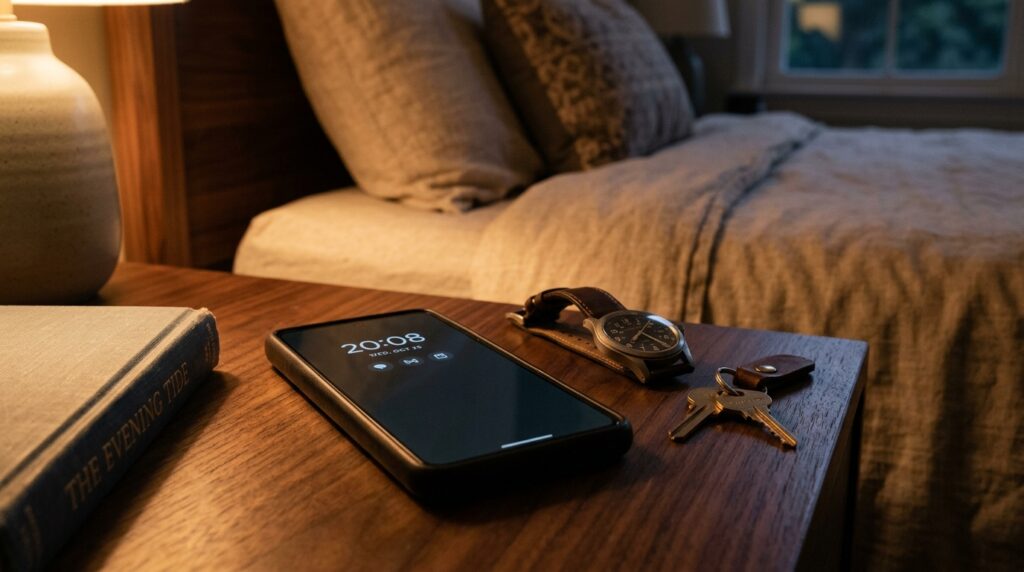
My phone used to buzz roughly ninety times a day. I counted once, out of curiosity more than concern, and immediately regretted knowing the number. Emails, app updates, social notifications, news alerts, a calendar reminder for a meeting I already knew about because I’d set the reminder myself an hour earlier. None of it was urgent. All of it interrupted whatever I was actually doing, pulling my attention sideways for a few seconds that somehow added up to a fractured, scattered feeling by the end of most days.
I didn’t ease into fixing it, which is out of character for me, I’m usually a gradual-change person. I went into settings and turned off notifications for every single app, all at once, cold turkey, then turned three back on: calls, texts, and calendar. Everything else had to earn its way back in, and almost nothing has, months later. A couple of apps made a case for themselves in the first week and got reinstated. Everything else just quietly stayed off, and I never missed it enough to reconsider.
The first few days felt oddly quiet, almost like waiting for something that never came, a phantom-limb kind of restlessness where I’d reach for my phone expecting a notification and find nothing there. Then I stopped noticing the absence entirely, which was the real signal that none of it had mattered in the first place. The emails were still there when I opened the app on my own schedule, exactly as urgent or unurgent as they would have been if I’d seen them the moment they arrived. The news hadn’t gone anywhere, the world hadn’t ended in my absence. I just stopped being interrupted by things that could always wait an hour, or a day, without any real consequence.
What surprised me most was how much of my day had been shaped by other people’s timing instead of my own, how much of my attention I’d been handing over by default to whoever happened to send something. Every notification is, at bottom, someone else deciding when you should stop what you’re doing and pay attention to them, and I’d been accepting that arrangement roughly ninety times a day without ever consciously agreeing to it. Cutting them down to three apps put that decision back where it belonged, with me, choosing when to look rather than being told.
There’s a harder truth underneath this I didn’t expect to run into. A lot of those notifications weren’t actually annoying, they were engineered to feel slightly rewarding, a small dopamine hit disguised as information. Turning them off didn’t just remove interruptions, it removed a habit loop I hadn’t fully noticed I’d built, checking my phone not because anything needed checking but because some part of me had been trained to expect a small reward there. That took longer to fade than the notifications themselves did.
I still check things. I’m not off the grid, and I’m not interested in performing some kind of digital minimalism purity test. I check on my terms now though, in blocks, usually a few set times a day, instead of getting pulled sideways ninety times a day by things that almost never actually needed me right that second. The work I actually care about gets longer, more uninterrupted stretches now, and I notice the difference most in how much less scattered I feel by six in the evening.
If you’re skeptical this could actually matter, I understand, I was too. The only real way to know is the same blunt test I used: turn everything off for a week and see what you genuinely miss. For me, the answer was almost nothing.
A few months in, I did an experiment out of curiosity: I turned everything back on for a single day, just to see how it felt after the reset. It was unpleasant almost immediately, a low buzz of interruption I’d completely forgotten was ever normal. What used to be invisible background noise, because I was inside it constantly, became obvious the moment I had something to compare it against. I turned it all back off again by early afternoon.
The change has affected how I read other people’s relationship with their phones too, which I didn’t expect. I notice now when a friend checks their phone mid-conversation for something that clearly wasn’t urgent, a reflex I used to share and no longer really have. I’m not saying this to sound superior about it, I was exactly that person for years. I just notice it now because I remember what it felt like to be pulled sideways ninety times a day, and I can see it happening to other people in real time.
If I had to give the single most useful piece of advice from this whole experiment, it’s that you don’t need to negotiate with yourself about which notifications to keep. The negotiating is what keeps you stuck, endlessly deciding case by case. Turn it all off, live with the silence for a week, and let the apps that actually deserve to come back earn it individually, on their own merits, rather than by default.